Von Rumpel’s terminal illness
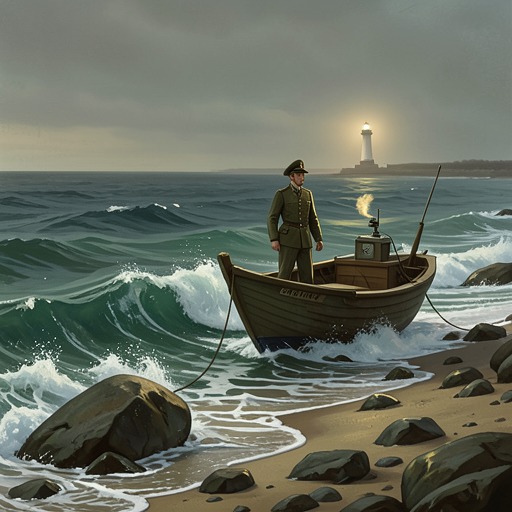
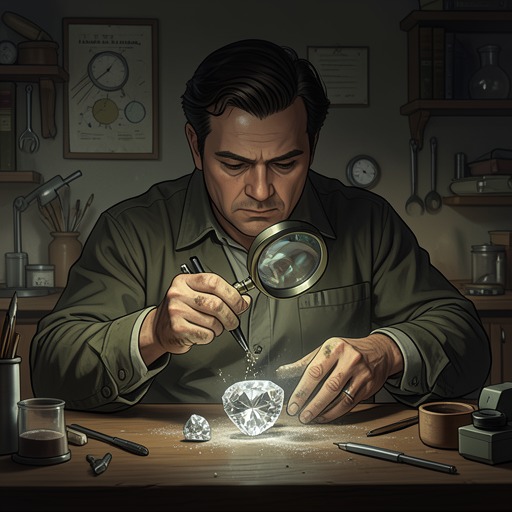
All the Light We Cannot SeeReinhold von Rumpel’s terminal illness shapes both the urgency and the uncertainty of his pursuit of the Sea of Flames. The disease is not named in the cited passages, but its advance is described as a murderous growth corrupting his body; the physician has predicted a deadline that von Rumpel eventually outlives. His hope that the stone can save him gives the search its personal stakes, while the trail of replicas makes the object he seeks increasingly difficult to identify.
An Illness Without a Named Diagnosis
The text supplies no diagnosis, treatment, or account of how von Rumpel first learned he was ill. Instead, it makes the condition legible through its consequences: he feels the disease spreading through his body, and his awareness of a physician’s prognosis accompanies his efforts to find the stone. The evidence therefore establishes a terminal condition without specifying its medical name or offering a fuller clinical history.
The illness becomes especially stark when von Rumpel, alone in the house, considers what remains certain. He has spent four days searching and has made what he judges to be mistakes; the possibility that the stone was in the Paris museum all along troubles him, as does the possibility that the story of the stone was a hoax. Against these collapsing explanations, he recognizes only the disease’s continuing advance. His father’s remembered words—that he is being tested—also surface in this moment, giving his crisis the shape of an ordeal without resolving it.
The Stone as a Perishable Hope
The search’s uncertainty is built into the stone’s wartime concealment. As the museum prepares to protect its collections, Daniel LeBlanc carries one of four stones—three replicas and the real diamond—out of Paris in his tool case. The plan sends the stones in different directions and requires each carrier to behave as though he has the genuine one. Even Daniel cannot be sure: he tells himself the stone he carries cannot be real, yet wonders whether it might be.
The replicas deepen von Rumpel’s uncertainty. Dupont made three using a casting and never saw the real diamond, but von Rumpel believes his account. Later, von Rumpel revisits the possibility that the Sea of Flames remained in the museum, and suspects that the mineralogist and assistant director may have deceived him. He also considers other possible transfers and hiding places. The illness makes the object seem like a possible reprieve, but the chain of copies, concealments, and uncertain testimony denies him reliable knowledge of where it is—or whether it can fulfill that hope.
The Deadline and the Search
After five days in the house, von Rumpel is still without the diamond. The last German-controlled port in Brittany is nearly lost, and the Atlantic Wall with it; meanwhile, he has already lived beyond the deadline the physician predicted. That reprieve is not recovery. The passage places his continued survival beside the worsening military situation and his fruitless search, so that time appears to have been extended without delivering either security or the stone.
Near the end of the cited sequence, von Rumpel hears the house’s twin bells, recoils, and falls. He watches a candle roll toward the curtains and wonders whether this is how death comes. The scene does not confirm that he dies there. It instead leaves him at the convergence of bodily vulnerability, military defeat, and an unfinished search: the deadline has passed, but the illness and the danger have not.